You looked up your chart on a Western site and got Scorpio Sun. You checked a Vedic calculator and got Libra. Neither is wrong. The only difference is Ayanamsa, and it matters for every calculation in your birth chart.
What Is Ayanamsa?
Ayanamsa is a Sanskrit word. Ayana means movement, and Amsha means portion or component. Together, Ayanamsa refers to the angular gap between the starting point of the Western tropical zodiac and the starting point of the Vedic sidereal zodiac. That gap currently stands at approximately 24 degrees and increases slowly over time.
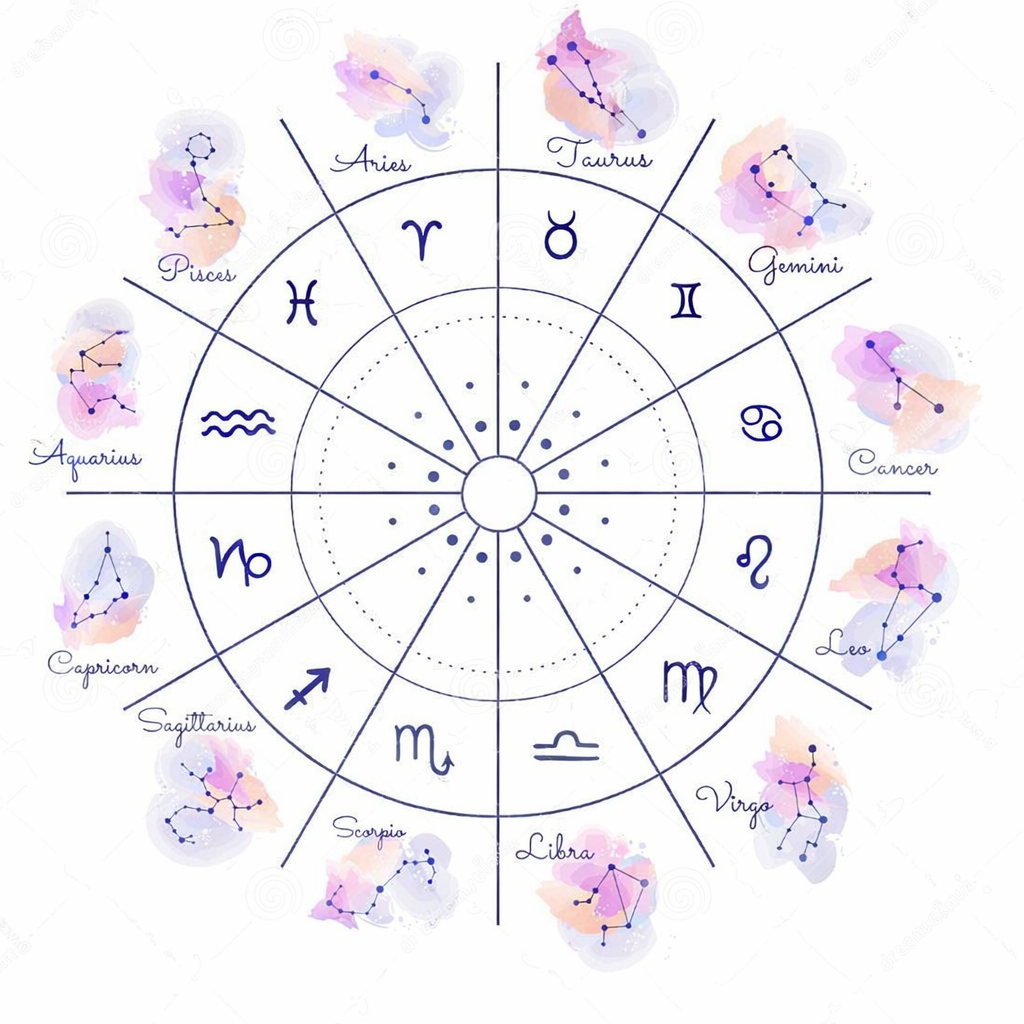
Both zodiacs use the same 12 signs with the same names: Aries, Taurus, Gemini, and so on. Both divide the sky into 12 equal sections of 30 degrees each. The only difference is where each zodiac begins. The tropical zodiac used in Western astrology starts at the vernal equinox, the point where the Sun crosses the celestial equator each spring. The sidereal zodiac used in Vedic astrology starts at a fixed point among the stars. These two starting points are not the same, and the distance between them is the Ayanamsa.
| What it is | The angular gap between the tropical zodiac starting point and the sidereal zodiac starting point |
| Current value | Approximately 24.2 degrees (2026), increasing slowly each year |
| Why it exists | Because Earth’s axis wobbles slowly over thousands of years (precession of equinoxes) |
| Rate of change | About 50.3 arcseconds per year, or approximately 1 degree every 72 years |
| Practical effect | Vedic planet positions are roughly 24 degrees behind Western positions in 2026 |
| Formula | Vedic (Sidereal) position = Western (Tropical) position minus Ayanamsa |
What Causes the Gap: Precession of the Equinoxes
The Earth does not spin on a perfectly fixed axis. It shifts very slowly, completing one full shift roughly every 26,000 years. This shift causes the vernal equinox, the starting point of the tropical zodiac, to drift slowly backwards through the constellations. It moves at approximately one degree every 72 years, a phenomenon astronomers call the precession of the equinoxes.
The sidereal zodiac is anchored to the fixed stars and does not move with this drift. The tropical zodiac moves with the seasons, following the vernal equinox. At some point in history, both zodiacs started from the same position. Most scholars and astrological traditions place this alignment somewhere around 285 AD, though the exact date is debated. Since that alignment, the gap has been growing. By 2026, it has widened to approximately 24.2 degrees, which is nearly an entire zodiac sign.
This is why your Sun, Moon, and all planetary positions in a Vedic chart are shifted back by roughly 24 degrees compared to their Western positions. If your Western chart shows Sun at 5 degrees Scorpio, your Vedic chart will show Sun at approximately 11 degrees Libra. This is not an error in either system. They are measuring from different starting points.
Tropical Zodiac vs Sidereal Zodiac: What Each Is Based On
The Tropical Zodiac (Sayana)
The tropical zodiac used in Western astrology is based on the seasons. Zero degrees Aries always falls at the vernal equinox, regardless of where the actual constellation Aries is in the sky. This means the tropical zodiac tracks the Earth’s relationship with the Sun through the year, not the actual positions of the stars. The Sun enters tropical Aries on or around March 21 every year, which is the spring equinox in the Northern Hemisphere. This connection to the seasons is why Western astrology emphasises the Sun sign heavily.
The Sidereal Zodiac (Nirayana)
The sidereal zodiac used in Vedic astrology is based on the actual positions of the fixed stars. Zero degrees Aries is anchored to a specific point among the constellations. The word Nirayana means without movement or fixed. Because the sidereal zodiac does not move with the precession of the equinoxes, a planet placed in sidereal Aries is actually in or near the constellation Aries in the sky. Vedic astrology uses this system because it believes predictions should be based on the actual astronomical positions of planets relative to fixed stars, not their positions relative to a moving equinox point.
Which One Is Right?
This question misses the point. The two systems are built on different philosophical foundations and different astronomical reference frames. Neither is wrong within its own framework. Western astrology using the tropical zodiac has produced meaningful insights for centuries. Vedic astrology using the sidereal zodiac has done the same. The problem arises only when people mix elements of both systems or compare results without understanding that the two zodiacs measure from different starting points. A Vedic birth chart cannot be interpreted using Western principles, and vice versa.
Lahiri and Other Ayanamsa Systems
If Ayanamsa is simply the gap between the two zodiacs, why are there multiple Ayanamsa systems rather than just one? The answer is that while the precession of the equinoxes is a confirmed astronomical fact, the exact starting point of the sidereal zodiac is not universally agreed upon. Different schools of thought use different fixed stars or different historical reference moments to define where zero degrees sidereal Aries begins. This produces slightly different gap values and therefore slightly different planetary positions.
| Ayanamsa Name | Value (2026) | Reference Point | Who Uses It |
| Lahiri (Chitrapaksha) | ~24.2° | Chitra Nakshatra (star Spica) | Most Vedic astrologers, Government of India standard, Hindu Panchang |
| Raman | ~22.7° | Surya Siddhanta calculations | Followers of the B.V. Raman tradition, widely used in South India |
| Krishnamurti (KP) | ~23.9° | Close to Lahiri, slight difference | KP astrology practitioners specifically |
| Yukteshwar | ~22.3° | Sri Yukteshwar’s system | Followers of Sri Yukteshwar Giri and some spiritual traditions |
| Fagan-Bradley | ~24.8° | Western sidereal reference | Western sidereal astrologers, not used by Vedic Jyotish |
Lahiri Ayanamsa: The Standard
Lahiri Ayanamsa was developed by astronomer Nirmal Chandra Lahiri (1906-1980) and officially adopted by the Government of India for use in the national calendar and panchang calculations. It uses the fixed star Chitra (Spica, the bright star in the constellation Virgo) as its reference point, placing it at zero degrees sidereal Libra. Lahiri is the most widely used Ayanamsa among Vedic astrologers worldwide and is the default in most Vedic astrology software.
For beginners and for anyone wanting to learn Vedic astrology, starting with Lahiri Ayanamsa is strongly recommended. It is compatible with the widest range of classical texts, traditional techniques, and fellow practitioners.
What This Means for Your Birth Chart in Practice
The Ayanamsa affects every single planetary position in your birth chart. Not just the Sun sign but the Moon sign, the Ascendant, and all nine Vedic planets. A 24-degree shift means that planets sitting near the beginning or end of a sign in the tropical zodiac will often be in a completely different sign in the sidereal zodiac. Planets in the middle of a tropical sign are more likely to remain in the same sign after the Ayanamsa correction, but shifted back in degree.
The Ayanamsa also affects every divisional chart derived from the birth chart. Even a small difference of one degree in Ayanamsa can change a planet’s position in the Navamsa or other divisional charts. This is why choosing the correct Ayanamsa and entering an accurate birth time are both essential for reliable Vedic chart calculations.
A Practical Example
Sun at 15 degrees tropical Scorpio in the Western chart. Subtract the 2026 Lahiri Ayanamsa of approximately 24.2 degrees. The result is Sun at approximately 20.8 degrees sidereal Libra in the Vedic chart. The sign changes from Scorpio to Libra. This explains why people who know their Western Sun sign often discover a different Sun sign in their Vedic chart, and why the personality descriptions may feel more accurate in one system than the other, depending on which zodiac that person’s Sun actually aligns with more closely.
All charts on atriastrology.com use Lahiri Ayanamsa by default. Use the Birth Chart Generator to generate your Vedic birth chart with accurate sidereal positions, or the Rising Ascendant Sign Calculator to find your Vedic Ascendant.
Final Thought
The Ayanamsa is not a source of confusion once you understand what it is. It is simply the correction factor that translates between two different but equally valid ways of mapping the sky. Vedic astrology uses the sidereal zodiac because it is anchored to the fixed stars, making it consistent across centuries and allowing the kind of precise predictive work that the Dasha system, Nakshatra calculations, and divisional charts depend on. Knowing your correct Vedic planetary positions, calculated using the Lahiri Ayanamsa, is the first step to a genuinely accurate Vedic reading.
The stars have not moved. The two zodiacs measure them from different starting points. Understanding that difference is understanding the foundation of Vedic astrology.
Frequently Asked Questions
The difference is caused by the Ayanamsa, the approximately 24-degree gap between the tropical zodiac used in Western astrology and the sidereal zodiac used in Vedic astrology. Both systems place planets in different positions because they measure from different starting points. Western astrology measures from the vernal equinox (a moving point), while Vedic astrology measures from a fixed point among the stars. Neither reading is wrong within its own framework. They are based on different reference points and philosophical premises.
The Lahiri Ayanamsa in 2026 is approximately 24.2 degrees. This value increases slowly each year at a rate of about 50.3 arcseconds per year, which is roughly one degree every 72 years. Different Ayanamsa systems give slightly different values depending on their reference points.
For Vedic astrology, Lahiri Ayanamsa is the recommended starting point and the current standard. It is officially adopted by the Government of India, used in the national Hindu calendar, and is compatible with most classical Vedic texts and traditional techniques. It is also the default in most Vedic astrology software.
Different systems exist because there is no universal agreement on exactly where the sidereal zodiac begins. While the precession of the equinoxes is an established astronomical fact, the exact reference star or historical epoch used to define zero degrees sidereal Aries varies between traditions. Lahiri uses the star Chitra (Spica) as its reference, while Raman and KP systems use slightly different calculations, leading to small variations.
Yes. The Ayanamsa increases every year due to the precession of the equinoxes. The rate is approximately 50.3 arcseconds per year, or about one degree every 72 years. It was zero around 285 AD and has been increasing ever since, currently standing at around 24 degrees.
Mixing the two systems in a single reading is generally not recommended because they operate on different mathematical frameworks. Using Western transits over Vedic natal positions can produce unreliable results since the systems measure from different starting points.
The sidereal zodiac aligns more closely with actual star positions, which is why Vedic astrologers consider it more precise for predictive work. The tropical zodiac, however, is linked to Earth’s seasonal cycle and remains meaningful in Western astrology. Accuracy depends on the framework being used.
Divisional charts are highly sensitive to exact planetary degrees. Even a one-degree difference in Ayanamsa can shift a planet into a different division, especially in charts like Navamsa (D9) or Shastiamsha (D60). This is why using a consistent and accurate Ayanamsa is essential.