If one planet in your birth chart decides whether you take action or stay stuck, it is Mars. It does not wait for the right moment; it creates one.
What Is Mars in Vedic Astrology?
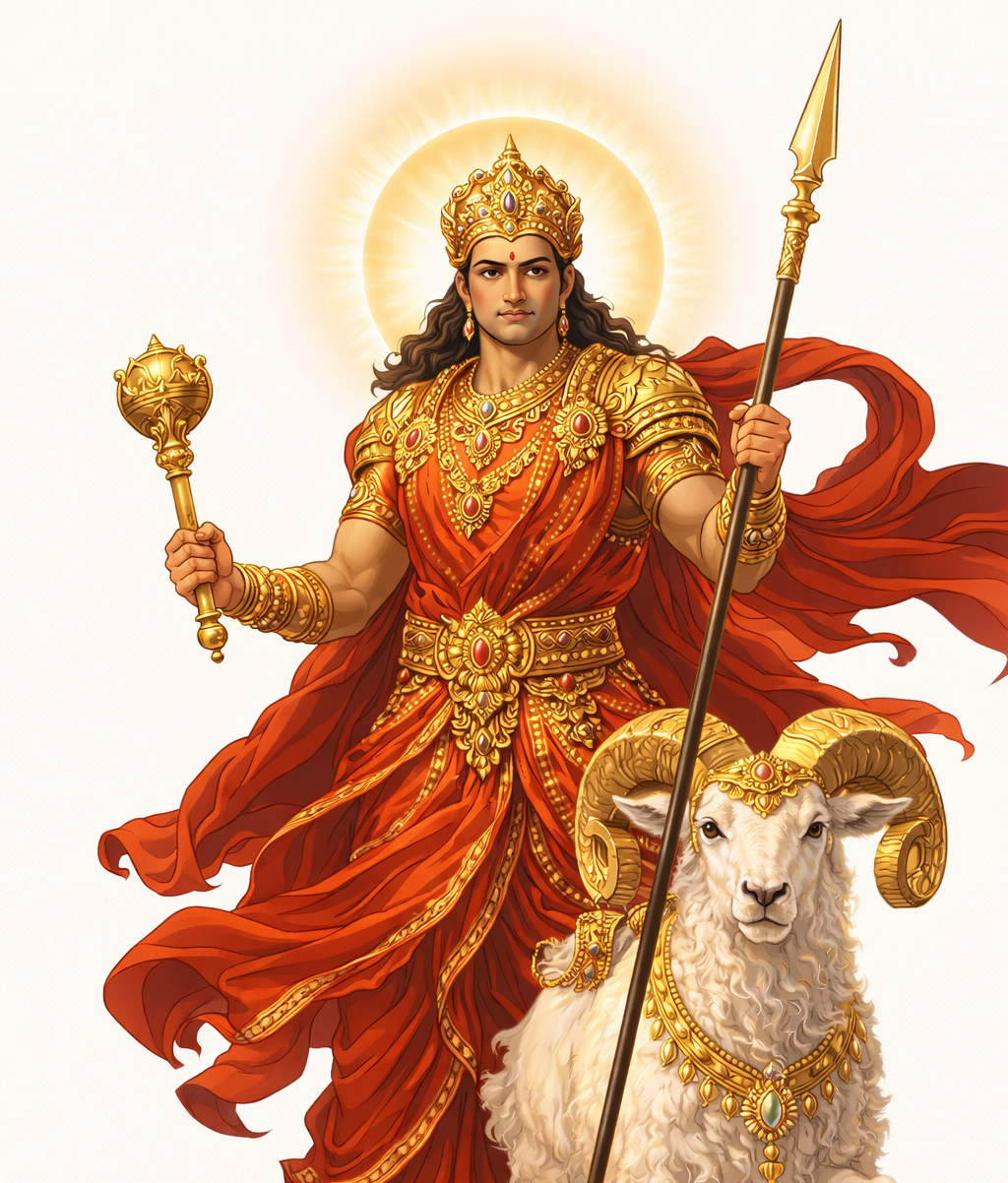
Mars, known as Mangal in Hindi, is the planet of raw energy, courage, and drive in Vedic astrology. It is the force behind every act of boldness: starting a business, competing in sport, standing your ground when it matters. No other planet in Astrology embodies the essence of willpower and physical stamina quite like this one.
| Sanskrit Names | Mangal, Kuja, Angaraka, Bhoomi Putra |
| Element | Fire (Agni) |
| Nature | Natural malefic, but benefic when well-placed |
| Own Signs | Aries (Mesh) and Scorpio (Vrishchik) |
| Exalted In | Capricorn (Makar) at 28 degrees |
| Debilitated In | Cancer (Karka) at 28 degrees |
| Day of the Week | Tuesday (Mangalvar) |
| Gemstone | Red Coral (Moonga) |
| Mahadasha Duration | 7 years (Vimshottari Dasha) |
| Karaka For | Courage, siblings, land, property, surgery, sports |
In the Navagraha cabinet, Mars holds the rank of Senapati, the Commander-in-Chief. It is a fiery, masculine, and natural malefic planet. Malefic here does not mean harmful by default. It means Mars’s energy is forceful and demanding by nature. Channelled well, it becomes ambition, athleticism, and decisive action. Poorly placed or afflicted, it turns into aggression, impulsiveness, and conflict. Which side shows up depends almost entirely on Mars’s placement in your birth chart.
Mars in Hindu Mythology
Mars carries two distinct mythological identities in Hindu tradition, and both reveal something about the planet.
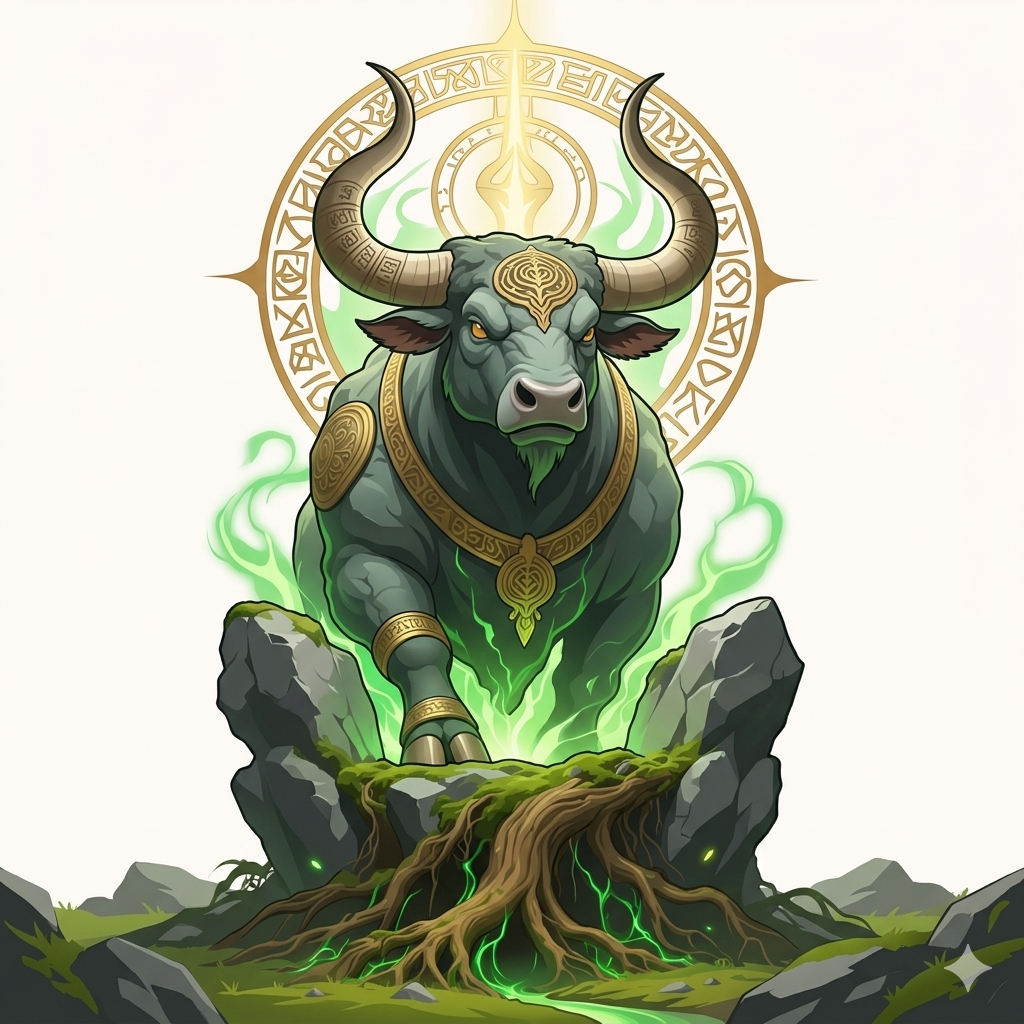
The first is Bhoomi Putra, the son of Mother Earth. One story tells how Lord Vishnu, in his Varaha (boar) avatar, rescued the Earth from the demon Hiranyaksha. From the reunion of Varaha and Earth was born a child with a red complexion, later called Lohitang (the red-bodied one) and named Mangal. Mentored by the sage Bharadwaja, he earned his place among the planets through penance and devotion. This origin explains why Mars governs land and property in astrology. As Earth’s son, Mars has an inherent claim on physical ground.
The second identity is Virabhadra, the fierce warrior born from a lock of Lord Shiva’s hair in a moment of divine fury, later placed in the heavens as the planet Angaraka. The Virabhadra story explains Mars’s connection to war, fire, and righteous anger. Together, these two origins give Mars its dual character: grounded and physical like Earth, fierce and fiery like Shiva’s wrath.
What Does Mars Govern in Your Life?
Mars is Karaka (the significator) for several essential areas of life. Understanding what it represents explains why its placement carries such weight in any chart reading.
Energy, Vitality, and Physical Strength
Mars is the primary source of physical stamina and life force in a birth chart. Where it sits is where you put in the most energy. A well-placed Mars means the body is strong, the mind acts decisively, and projects get finished. A weak Mars means chronic fatigue, low motivation, and a tendency to start things and not complete them. Health-wise, Mars governs the blood, bone marrow, and muscles; the body’s active systems. It also rules the right nostril, the head, and the forehead.
Courage, Siblings, and the Fighting Spirit
Bravery and the willingness to face challenge directly are Mars territory. This includes physical courage and the courage to take a calculated risk, start something without certainty, and persist through difficulty. Mars is also the primary karaka for younger siblings, especially brothers. The strength of Mars in a chart often reflects the nature of sibling relationships. A strong Mars brings energetic, supportive siblings. An afflicted Mars can indicate friction, rivalry, or separation from younger brothers.
Land, Property, and Real Estate
As the son of Earth (Bhoomi Putra), Mars has a direct and classical connection to physical land, real estate, and construction. It governs the acquisition of property, ancestral land disputes, building projects, and all immovable assets. During Mars Mahadasha or during significant Mars transits over the 4th house, property matters become particularly active. A strong Mars in a chart is one of the clearest indicators of gains through real estate over a lifetime.
Career Fields
Mars governs any career requiring physical effort, competition, courage, or technical precision. This covers the military, police, surgery, sports and athletics, engineering, construction, firefighting, and industries involving metals, machinery, or fire. Sales roles requiring assertiveness, stockbroking, and any field where performance under pressure is the engine of success also fall under Mars. Mars-ruled people tend to perform best in environments with clear targets, direct feedback, and the chance to compete.
Mars and the Three Nakshatras
Mars rules three Nakshatras: Mrigashira, Chitra, and Dhanishtha. Mrigashira brings a curious, gentle, searching energy; Mars’s fire softened into inquiry. Chitra combines artistic vision with sharp precision and a drive for perfection. Dhanishtha amplifies ambition, musical ability, and the drive for material achievement. If your Moon, Ascendant, or any key planet falls in these Nakshatras, Mars plays a particularly prominent role in shaping that area of your chart.
Strong Mars vs Weak Mars: What It Looks Like in Life
The difference between a strong and weak Mars in a birth chart is one of the most striking contrasts in Vedic astrology. Mars represents energy, courage, and action, but whether it manifests as confidence and decisive leadership or as aggression and impulsive conflict depends largely on its strength and placement.
| Area | Strong Mars | Weak or Afflicted Mars |
|---|---|---|
| Energy | High stamina, drives hard, finishes what it starts | Chronic fatigue, low motivation, half-finished projects |
| Courage | Bold and decisive, takes calculated risks | Avoids confrontation, fearful, lacks follow-through |
| Temper | Assertive but controlled, knows when to fight | Either explosive and uncontrolled or completely suppressed |
| Career | Thrives in competitive, physical, or technical fields | Struggles in fast-paced environments, stagnates |
| Health | Strong blood, quick recovery, good physical stamina | Anaemia, bone marrow issues, poor stamina |
| Property | Acquires land and assets through drive | Disputes over property, difficulty in ownership |
| Relationships | Passionate, protective, physically present | Conflict-prone, marriage delays, passive energy |
When Is Mars Strong and When Is It Weak?
Mars is strongest when placed in Aries or Scorpio (own signs), Capricorn (exalted at 28 degrees), or the 10th house (Dig Bala). Mars aspected by Sun, Moon, or Jupiter is well-supported. Mars is weakest when debilitated in Cancer, combust by the Sun, or heavily aspected by Saturn, Rahu, or Ketu. A retrograde Mars tends to internalise its energy, which can increase frustration if not expressed through physical activity or purposeful work.
No placement is entirely good or bad in isolation. Always read Mars in the context of the full chart; the Ascendant, the sign, the aspects, and the Nakshatra all modify the result significantly.
Remedies to Strengthen Mars
Every Mars remedy points in the same direction: channel the warrior’s energy outward through courage, discipline, and service, not inward through anger and ego.
Devotional Practices
- Hanuman Chalisa: Reciting the Hanuman Chalisa every Tuesday is the single most universally recommended remedy for Mars. Lord Hanuman embodies the highest expression of Martian energy: immense strength in service of a righteous purpose.
- Lord Kartikeya worship: Kartikeya (Murugan), the commander of the celestial army, is Mars’s presiding deity. Worship at Kartikeya temples, especially on Tuesdays, is considered particularly effective for strengthening Mars.
- Mangal Beej Mantra: Om Kraam Kreem Kraum Sah Bhaumaya Namah; 108 times on Tuesdays. For daily practice, Om Angarakaya Namah is simpler and equally valid.
Lifestyle Practices Mars Responds To
- Fast on Tuesdays: Observing a Tuesday fast for 21 consecutive weeks is a classical Mars remedy. Eating once, in the evening, after sunset is the traditional form.
- Donate on Tuesdays: Red lentils (masoor dal), red cloth, copper vessels, or jaggery donated to young males or to temples on Tuesdays is the standard charitable practice for Mars.
- Physical exercise: The most direct and underrated Mars remedy. Strength training, martial arts, wrestling, or outdoor sports give Mars energy a proper channel. When it has no outlet, it turns into frustration, arguments, or reckless decisions.
- Maintain discipline: A structured daily routine, avoiding impulsive financial or relationship decisions, and channelling effort into one focused goal rather than scattered activity all work with Mars rather than against it.
Gemstone: Red Coral (Moonga)
Red Coral is the gemstone assigned to Mars. When correctly prescribed, it is worn on the ring finger of the right hand in copper or gold, on a Tuesday during Mars hora. It is most naturally suited to Aries and Scorpio Ascendants, for whom Mars is the Ascendant lord. For other Ascendants, the suitability depends on Mars’s functional role in the chart. Never wear a Mars gemstone without a qualified Vedic astrologer reviewing your full chart first.
Mangal Dosha: Mars and Marriage
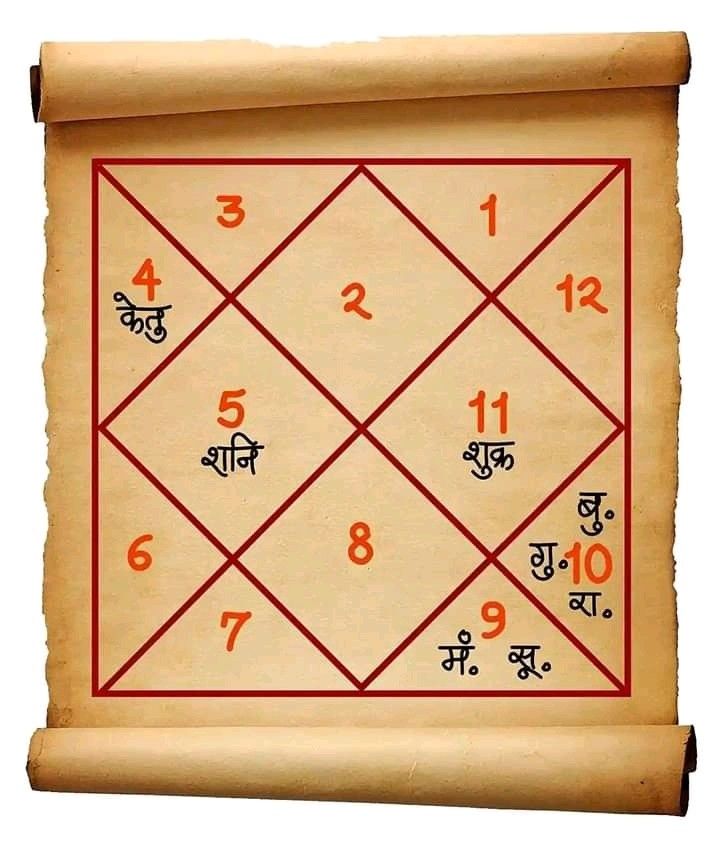
Mangal Dosha is the most discussed Mars topic in Indian astrology, particularly in the context of marriage matching. It is assessed from the Lagna (Ascendant), Moon chart, and Venus chart. When Mars is placed in the 1st, 4th, 7th, 8th, or 12th house from any of these three, the person is considered Manglik.
This placement is associated with friction, delays, or challenges in marriage, but not necessarily failure. Several classical cancellation conditions exist, and the dosha is said to reduce after age 28, and two Manglik individuals marrying each other is traditionally considered a natural balance. In this case, a proper assessment by a qualified astrologer matters far more than a simple house count.
For an initial check, use the Mangal Dosha Calculator.
Ruchaka Yoga: When Mars Becomes Extraordinary
Ruchaka Yoga is one of the five Pancha Mahapurusha Yogas, and it belongs exclusively to Mars. It forms when Mars is in Aries, Scorpio (own signs), or Capricorn (exalted), and simultaneously in a Kendra house (1st, 4th, 7th, or 10th from the Ascendant). Both conditions must be present at the same time.
People born with strong Ruchaka Yoga tend to have a powerful physique, natural leadership ability, a fearless drive to compete and win, and success in fields requiring courage and strength, like military, sports, surgery, politics, and real estate. The 10th house placement in Capricorn is the most powerful form, as Mars is exalted and simultaneously gains Dig Bala there.
Like all yogas, context matters. Affliction by Saturn, Rahu, or Ketu reduces the yoga’s positive effects. For certain Ascendants, Mars may function as a functional malefic even while forming Ruchaka, which changes how it expresses. Always assess in the full chart.
Check if Ruchaka Yoga is present in your chart using the Yoga Calculator.
Mars Mahadasha: The 7-Year Phase of Action
Mars Mahadasha lasts 7 years and is one of the most characteristically distinct periods in the Vimshottari system. When it begins, most people notice an almost immediate shift: more ambition, more urgency, and a stronger drive to act. This is a period that rewards those who take bold steps and follow through with disciplined effort.
The positive side includes career advancement in competitive fields, acquisition of property and land, gains related to younger siblings, physical fitness, and the courage to break patterns that were no longer working. Many people make their boldest and most consequential moves during Mars Mahadasha.
The challenges include impulsive decisions, a higher risk of accidents if Mars is badly placed, conflicts with siblings or partners, and a temper that needs active management. Patience is the quality Mars Mahadasha most reliably demands.
The results depend entirely on Mars’s natal placement and the houses it rules for your Ascendant. For Aries and Scorpio Ascendants, Mars is the Lagna lord and the period is typically empowering. For Cancer Ascendant, Mars is Yogakaraka, and despite its debilitation, the Dasha often brings career gains.
To check if your Mars Dasha is running, use the Dasha Calculator.
Final Thoughts
Mars is the most straightforward planet in Astrology to understand and the hardest to master. It does not complicate itself with subtlety. It wants action, and it rewards courage, not recklessness, but the willingness to move when moving is required.
People who work well with Mars are not people without anger. They are people who have learned to direct that fire: into their training, their work, their craft, their family’s protection. A well-expressed Mars does not make a violent person. It makes a person who shows up, does the work, and does not flinch when things get hard.
Whether your Mars is strong or weak right now, the path to strengthening it is the same: move your body, do your work, and stand your ground with dignity when it matters. That is the warrior’s lesson, and no planet in the zodiac teaches it more directly.
“Mars does not ask if you are ready. It asks only whether you will act.”
Frequently Asked Questions
Mars is a natural malefic, meaning its energy is forceful and demanding by nature. However, malefic does not mean bad. Whether Mars helps or harms depends on its functional role for your Ascendant, its placement, and the houses it rules. For Aries, Scorpio, Cancer, and Leo Ascendants, Mars can be highly beneficial. The term simply indicates that Mars’s energy is sharp and direct rather than gentle.
Strong Mars is placed in Aries or Scorpio (own signs), Capricorn (exalted), or the 10th house (directional strength). It gives high physical energy, courage, leadership ability, and strong drive. It supports success in competitive fields such as sports, military, surgery, engineering, and real estate.
Common signs include low energy, fatigue, procrastination, difficulty asserting oneself, blood-related issues like anaemia, delays in property matters, and unfinished projects. If Mars is afflicted and overly strong, it may lead to aggression, accidents, and conflicts in relationships.
Ruchaka Yoga forms when Mars is in Aries, Scorpio, or Capricorn and placed in a Kendra house (1st, 4th, 7th, or 10th from the Ascendant). Both conditions must be met together. You can check this using your Vedic birth chart or a Yoga calculator.
Mangal Dosha occurs when Mars is in the 1st, 4th, 7th, 8th, or 12th house from the Ascendant, Moon, or Venus. It is linked to delays or challenges in marriage. However, many cancellation conditions exist, and its impact reduces after age 28. It is not inherently negative and should be properly evaluated before drawing conclusions.
The 10th house is generally considered the best as Mars gains directional strength (Dig Bala) there, often giving strong career results. The 3rd and 6th houses are also favourable for courage and overcoming obstacles. The 1st house gives strong personality and drive. Even traditionally difficult houses can give good results depending on the full chart.
Mars Mahadasha lasts 7 years in the Vimshottari Dasha system. Its starting point depends on the Nakshatra occupied by the Moon at birth. A Dasha calculator using your birth details can determine the exact timing.
Effective remedies include reciting the Hanuman Chalisa on Tuesdays, chanting the Mangal Beej Mantra (Om Kraam Kreem Kraum Sah Bhaumaya Namah) 108 times, donating red lentils or red cloth, regular physical exercise, and wearing Red Coral after proper consultation. Gemstones should only be worn after analysing the full chart.
For Cancer Ascendant, Mars rules the 5th and 10th houses, making it a Yogakaraka (highly beneficial planet). Although Mars is debilitated in Cancer, it still tends to give positive results, especially in career and creativity. During Mars Mahadasha, gains are common, though managing health and temper is important.