Kundli Milan involves a maximum score of 36, which is also referred to as 36 gunas in general, with 18 being a favourable threshold. This guide explains the scoring system, details eight Kootas, highlights significant Doshas, and clarifies what a Guna Milan score reveals about marriage compatibility.
What Is Kundli Milan?
Kundli Milan, also called Guna Milan, Ashtakoota Milan, or Horoscope Matching, is the Vedic method of assessing compatibility between two people before marriage. The word Guna means quality or attribute, and Milan means matching. The system evaluates eight categories of compatibility called Kootas, each carrying a certain number of points, totalling 36.
The comparison is based entirely on the Moon sign and birth Nakshatra of both individuals, not the Sun sign. In Jyotish, the Moon governs the mind, emotions, instincts, and inner nature. Marriage is fundamentally an emotional and psychological partnership, which is why the Moon’s position at the time of birth is used rather than the Sun sign that most people know from Western astrology.
To get started, you need the Janma Nakshatra of both partners. Find yours using the Nakshatra Calculator, then use the Kundli Matching Calculator for the full compatibility report.
The Eight Kootas at a Glance
The eight Kootas are listed below, from lowest to highest point value. Each measures a different dimension of compatibility, from working style and temperament to physical nature and genetic compatibility.
| Koota | Points | What It Measures | Based On |
| Varna | 1 | Working style and spiritual compatibility | Caste classification of the Nakshatra |
| Vashya | 2 | Mutual attraction and influence between the couple | Rashi categories (human, animal, wild, insect) |
| Tara | 3 | Health and longevity of the couple after marriage | Counting Nakshatras from bride’s to groom’s and back |
| Yoni | 4 | Physical compatibility and intimate nature | Animal symbol of the birth Nakshatra |
| Graha Maitri | 5 | Mental compatibility and friendship between partners | Friendship between Moon sign lords |
| Gana | 6 | Temperament and day-to-day behavioural compatibility | Deva, Manushya, or Rakshasa Gana of Nakshatra |
| Bhakoot | 7 | Emotional, financial, and family well-being after marriage | Rashi relationship between boy and girl |
| Nadi | 8 | Health of progeny, genetic compatibility | Nadi of birth Nakshatra: Aadi, Madhya, or Antya |
You have noticed that the point values are not equal. Nadi carries 8 points and Bhakoot carries 7. Together, these two Kootas account for 15 of the 36 total points, which is 42% of the entire score. This weighting is deliberate and significant, and understanding it is what separates a basic reading of a Guna Milan score from an informed one.
The Eight Kootas (36 Gunas) Explained
Varna: 1 Point
Varna compares the spiritual and working-style compatibility of the couple. The four Varnas are Brahmin, Kshatriya, Vaishya, and Shudra, assigned to Nakshatras rather than to individuals by birth. For the point to be awarded, the groom’s Varna should be equal to or higher than the bride’s. A mismatch here costs only 1 point, so while it is noted, it carries the least weight of all eight Kootas.
Vashya: 2 Points
Vashya assesses the natural attraction and mutual influence between the couple. The twelve Rashis are classified into five categories: human, wild quadruped, small quadruped, watery, and insect or reptile. When one partner’s Rashi has natural dominance or affinity toward the other’s, points are awarded. Full score means strong mutual pull and natural ease in the relationship’s dynamic.
Tara: 3 Points
Tara, also called Dina Koota, measures the health and general wellbeing of the couple in marriage. It is calculated by counting the number of Nakshatras from the bride’s birth Nakshatra to the groom’s and dividing by 9, then doing the same in reverse. Odd remainders are generally favourable, even remainders less so. This Koota reflects how the couple’s life circumstances, health, and general fortune interact over time.
Yoni: 4 Points
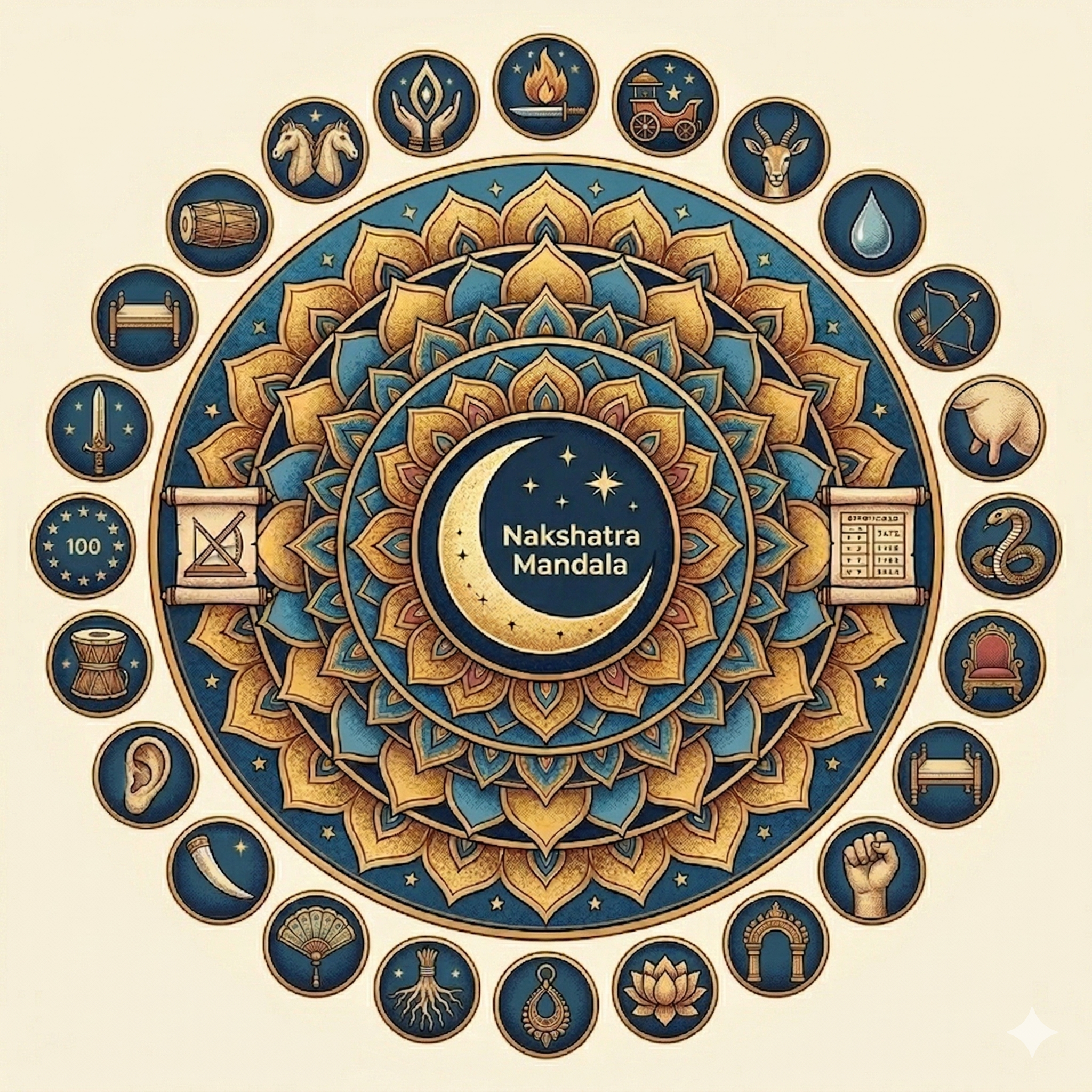
Yoni measures physical and intimate compatibility. Each of the 27 Nakshatras is assigned an animal symbol, such as horse, elephant, sheep, snake, dog, cat, rat, cow, buffalo, tiger, hare, deer, monkey, lion, or mongoose. Compatible animal pairs score fully. Enemy animal pairs score zero. This Koota reflects the natural compatibility of physical temperaments and intimate expression, and its 4-point weight reflects how central physical harmony is to a stable marriage.
Graha Maitri: 5 Points
Graha Maitri, also called Rashyadhipata Maitri, compares the natural relationship between the lords of the bride’s and groom’s Moon signs. It measures intellectual and mental compatibility, shared worldview, and the quality of the friendship that underlies the marriage. When Moon sign lords are natural friends in Jyotish, this Koota scores fully. Neutral relationships score partially. Enemies score zero. A strong Graha Maitri is what makes a couple feel understood rather than just tolerated by each other.
Gana: 6 Points
Gana assesses temperamental compatibility in daily life. The 27 Nakshatras are divided into three Ganas: Deva (divine, gentle, and idealistic), Manushya (human, balanced, and practical), and Rakshasa (assertive, intense, and self-directed). Deva with Deva scores fully. Manushya with Manushya scores fully. A Deva-Rakshasa combination scores zero and is called Gana Dosha. This matters in everyday interaction: a gentle and idealistic person and an intensely self-directed person can find long-term co-habitation genuinely difficult. Manushya-Deva and Manushya-Rakshasa combinations score partially.
The Two Kootas That Matter Most
Bhakoot: 7 Points
Bhakoot is the second-most weighted Koota. It assesses the relative position of the Moon signs of the bride and groom and reflects on emotional, financial, and family well-being after marriage. Full points are awarded when the Rashi relationship is harmonious. Zero points are awarded in three specific combinations that create Bhakoot Dosha.
The three adverse Bhakoot combinations are: the 6-8 axis (one partner’s Rashi is the 6th from the other’s and the 8th in reverse), the 5-9 axis (5th and 9th from each other), and the 12-2 axis (12th and 2nd from each other). Each has a traditional interpretation. The 6-8 relationship is associated with ongoing friction, health issues, and enmity between the families. The 5-9 combination raises concerns around children and inheritance. The 12-2 combination is associated with financial strain, as the 12th house governs expenditure and the 2nd governs savings.
Bhakoot Dosha can be cancelled when both partners share the same Rashi lord, when the Rashi lords are mutual friends, or when Nadi Koota scores fully. When Bhakoot Dosha is present and not cancelled, the 7-point loss significantly affects the total score, and experienced astrologers treat it as a serious flag requiring deeper chart analysis rather than just a lower number.
Nadi: 8 Points
Nadi is the most important Koota in the entire system, carrying the highest weight. The 27 Nakshatras are divided into three Nadis: Aadi (Vata), Madhya (Pitta), and Antya (Kapha). When the bride and groom share the same Nadi, Nadi Dosha forms and the score is zero for this Koota. When they have different Nadis, the full 8 points are awarded.
Nadi Dosha is considered the most serious Dosha in Kundli Milan. Traditionally it is associated with health problems in the couple, difficulties with progeny, and in its strongest form, loss of the partner. This is why even a high total Guna Milan score is considered inadequate if Nadi Dosha is present and uncancelled. A couple with a score of 30 but with Nadi Dosha occupies a weaker position than a couple with a score of 22 and no Nadi Dosha.
Nadi Dosha can be cancelled under specific conditions: when both partners share the same birth Nakshatra but different Padas (quarters), when both have the same Rashi but different Nakshatras, or when both have the same Nakshatra but different Rashis. In these cases, classical texts indicate the Dosha does not apply in full force. An experienced astrologer should confirm the cancellation rather than relying on a calculator alone.
What Your Score Actually Means
| Score | What It Means | Guidance |
| 0 – 17 | Below minimum. Significant incompatibilities across multiple Kootas. | Not recommended. Full chart review required before proceeding. |
| 18 – 24 | Acceptable match. Some areas of friction but a workable foundation. | Proceed with awareness of the weaker Kootas. Check for Doshas. |
| 25 – 32 | Good to very good match. Broad compatibility across most life areas. | A strong foundation. Standard Dosha checks still apply. |
| 33 – 36 | Excellent match on Ashtakoota parameters. | Still check Nadi Dosha, Bhakoot Dosha, and both full charts. |
One clarification that matters practically: these score ranges assume that neither Nadi Dosha nor Bhakoot Dosha is present. If either Dosha is present without cancellation, the score must be evaluated with that context. A score of 28 with uncancelled Nadi Dosha is not a strong match. A score of 22 with no Doshas and clean charts may serve the couple better.
What Ashtakoota (Gun Milan) Does Not Tell You
Ashtakoota Milan is a preliminary compatibility filter. It is built entirely on the Moon sign and Nakshatra. It does not examine the full birth chart of either person. A complete marriage assessment in Jyotish looks at several additional areas that the Guna Milan score cannot address.
The 7th house in both charts governs marriage, partnerships, and the spouse. Its lord, the planets placed in it, and the aspects it receives all shape the nature and timing of marriage and its quality. A couple with a strong Guna Milan score but afflicted 7th houses in both charts faces challenges that the matching score never captured.
Venus in the charts governs love, attraction, and the quality of romantic connection. Jupiter governs dharma in marriage, children, and the husband in a woman’s chart. The condition of these planets and their Dashas at the time of marriage affect the practical experience of the union far more directly than a Nakshatra-based score.
The Navamsa chart, called the D9, is the divisional chart specifically associated with marriage in Jyotish. It is considered the most important chart for understanding what a marriage will actually be like. An experienced astrologer will always look at the D9 of both partners alongside the Guna Milan score. A 30-point Guna Milan with weak D9 charts in both partners may produce a marriage that looks compatible on paper and struggles in practice. Use the D9 (Navamsa) Chart Calculator to generate your Navamsa chart alongside the Kundli matching report.
Mangal Dosha is assessed separately from the Ashtakoota system entirely. Mars placed in the 1st, 4th, 7th, 8th, or 12th house creates Mangal Dosha, which affects marital harmony in ways that the Guna Milan score does not account for. When one partner is Mangalik and the other is not, the difference requires specific remediation or matching of Mangalik partners to each other.
Final Thoughts
Kundli Milan is a tool with genuine value when used correctly. The eight Kootas assess real dimensions of compatibility: temperament, physical nature, mental friendship, genetic compatibility. The system has been refined over centuries of observation and continues to be used across millions of marriages in India for good reason.
The mistake is treating the number as the answer. A score of 26 with Nadi Dosha tells you something different from a score of 26 without it. A score of 22 with strong 7th houses, compatible Venus placements, and healthy D9 charts may produce a far more harmonious marriage than a score of 30 with afflicted charts and an unfavourable Navamsa.
Kundli Milan is the starting point of a marriage compatibility assessment, not the conclusion. Use it as the first filter it was designed to be, then look deeper.
Frequently Asked Questions
The traditional minimum is 18 out of 36. Scores below 18 indicate significant incompatibility and usually require detailed chart analysis. Scores between 18 and 24 are acceptable, while above 25 is considered good to excellent, assuming no major Doshas are present.
A score in this range indicates partial compatibility. Some areas will be harmonious, while others may need effort and understanding. The individual Koota scores highlight specific strengths and challenges in the relationship.
Nadi Dosha occurs when both partners share the same Nadi (Aadi, Madhya, or Antya). It is the most important Dosha in Kundli Milan. Cancellation can occur under certain conditions, such as different Padas of the same Nakshatra or compatible Rashi factors. Proper analysis is required to confirm cancellation.
Bhakoot Dosha forms when the Moon signs of the couple fall in unfavourable relationships such as 6-8, 5-9, or 12-2. It is the second most important factor in Guna Milan. Cancellation is possible if the Rashi lords are the same or friendly.
A score of 36 indicates perfect Koota matching but does not guarantee a perfect marriage. Other factors such as the 7th house, Navamsa chart, and planetary conditions must also be analysed for a complete picture.
Yes. A low score indicates potential challenges, not certain failure. A full chart analysis, including planetary strengths, Dosha presence, and Dasha compatibility, provides a more accurate assessment than the score alone.
Nadi is the most important Koota, carrying 8 out of 36 points. Bhakoot is the second most important with 7 points. Together, they form the foundation of compatibility assessment in the Ashtakoota system.
Kundli Milan is not mandatory but is often used as a compatibility check even in love marriages. It helps identify potential challenges in temperament, health, and family dynamics that may not be evident through emotional connection alone.