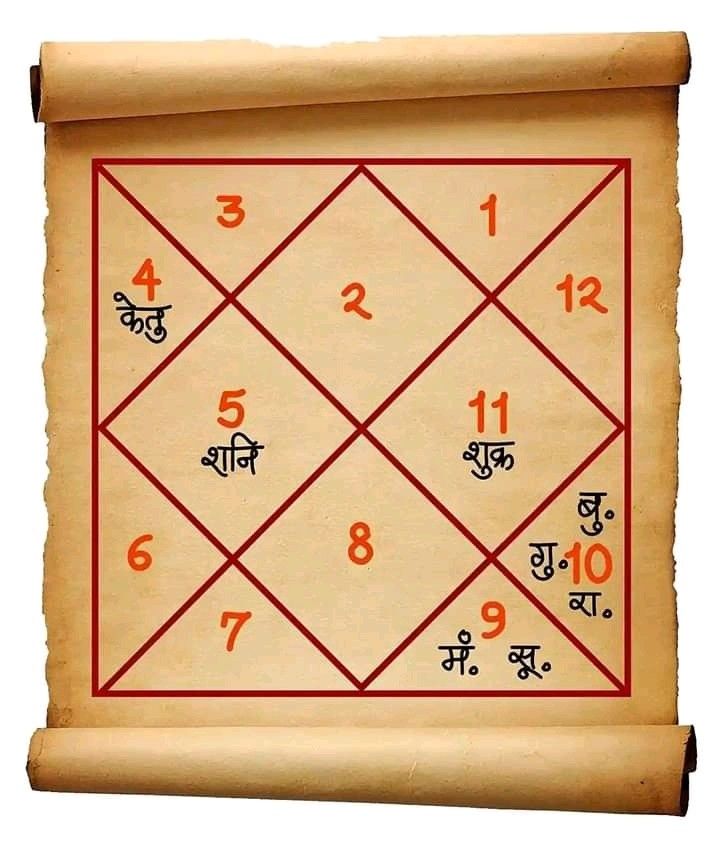
You may have seen a planet marked as combust in your birth chart and wondered what it means. First of all, “combust” does not mean “ruined”. But it does mean something important, and knowing what it is will help you read your chart far more clearly.
What Is a Combust Planet?
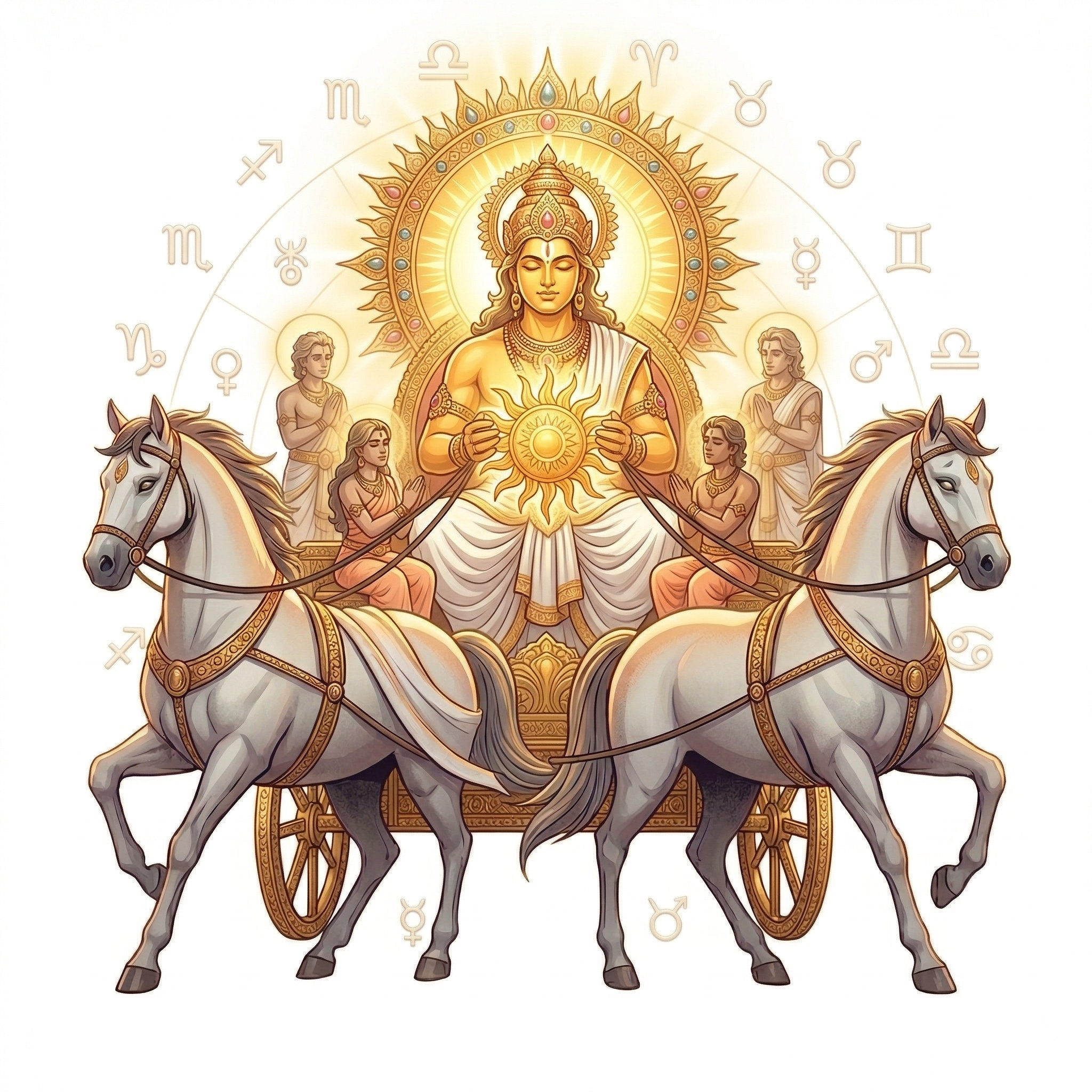
In Vedic astrology, a planet is called combust when it comes too close to the Sun in the birth chart. The Sanskrit word for this is Astangata, which means “set” or “gone into the Sun.” Just as a small star becomes invisible when the Sun rises, a planet that is too close to the Sun loses its independent strength and gets absorbed into the Sun’s energy.
Think of it this way. Imagine a team meeting where one person speaks so loudly and confidently that no one else can get a word in. The others are still in the room. They have their own opinions and skills. But they cannot express themselves freely because the dominant voice is drowning them out. That is what the Sun does to a planet in close proximity. The planet’s qualities become muted, hard to access, and sometimes turned inward rather than outward.
This is not a permanent flaw. It is a condition in the birth chart that tells you where a person needs to put in more conscious effort, and where things may not come as naturally as they would for someone without that combustion.
Why Does the Sun Cause Combustion?
The Sun is the source of light for all other planets. In Astrology, it represents the soul, authority, and the self. It is naturally the most powerful presence in the chart. When any planet moves within a certain number of degrees of the Sun, the Sun’s brightness literally outshines that planet. Astronomically, the planet becomes invisible from Earth because it disappears into the Sun’s glare.
This loss of visibility is the basis of combustion in astrology. A planet that cannot be seen from Earth is believed to lose its ability to deliver its results clearly. Its significations, the things it governs in your life, become harder to access or weaker in expression. Rahu and Ketu are shadow points, not physical planets, so they are never combust. The Sun itself cannot combust. Every other planet can.
Combustion Degrees: How Close Is Too Close?
Each planet has a specific degree range within which it is considered combust. The degrees are counted on either side of the Sun’s position. If a planet falls within that range, it is combust. The closer it is to the Sun’s exact degree, the stronger the combustion effect.
| Planet | Combust Within | When It Happens | Areas Affected |
|---|---|---|---|
| Moon | within 12° | Amavasya (new moon); Moon disappears completely into Sun | Emotions, mental peace, clarity of mind |
| Mercury | within 14° (direct)within 12° (retrograde) | Very common; Mercury is always close to Sun | Communication, logic, decision-making, business |
| Venus | within 10° (direct)within 8° (retrograde) | Also frequent Venus stays near Sun | Love, relationships, beauty, comfort, marriage |
| Mars | within 17° | Widest range; Mars stays combust longer | Courage, energy, siblings, property |
| Jupiter | within 11° | Significant; Jupiter combust for several weeks | Wisdom, children, wealth, teachers, husband (women) |
| Saturn | within 15° | Slow-moving; can be combust for months | Discipline, career, longevity, service |
A planet at exactly the same degree as the Sun is called Cazimi in Western astrology, or Moudyami in Vedic tradition. Some classical texts treat extreme closeness (within 1 degree) as a special condition where the planet is so deeply merged with the Sun that it actually gains a kind of solar strength, though it loses its own independent identity. This is debated among astrologers, so always look at the full chart before drawing conclusions.
What Does a Combust Planet Lose?
When a planet is combust, it loses what astrologers call its Chestha Bala, meaning its ability to act independently and deliver results through its own effort. In practical terms, this means:
The areas of life that planet governs become harder to manage or take more conscious work than they should. The person may feel less confident in those areas, even if they have natural ability. The planet’s significations tend to get absorbed into ego-driven expression, meaning results are tied to identity and self-image rather than flowing freely. During the Mahadasha or Antardasha of a combust planet, the weakened condition becomes more active in daily life and its effects are felt more directly.
Importantly, combustion does not affect the non-living significations of a planet as much as the living ones. For example, combust Jupiter may reduce the guidance received from actual teachers or fathers, but Jupiter’s role in giving wisdom through inner reflection can still be strong. The outward, relational expression suffers more than the internal one.
Effects of Combustion: Planet by Planet
The impact of combustion is different for each planet because each planet governs different areas of life. Here is what combustion typically affects for each of the six planets that can become combust.
| Planet | What Combustion Affects |
|---|---|
| Moon | The most sensitive combustion. When the Moon is very close to the Sun near Amavasya, the mind and emotions lose their stability. Anxiety, mood swings, and a disturbed inner life are common. The relationship with the mother can also be affected. Importantly, Moon is never technically combust in the classical sense since it is a luminary, but extremely close proximity to the Sun near new moon greatly weakens it. |
| Mercury | Mercury is the most frequently combust planet because it never moves far from the Sun. Combust Mercury affects how clearly a person thinks, speaks, and communicates. Decision-making becomes harder. Business negotiations and contracts need extra care. However, combust Mercury can also create deep internalised intelligence ; less outward but often more thoughtful. |
| Venus | Combust Venus affects love, relationships, and the comforts of life. In a man’s chart, where Venus represents the wife, combustion can indicate friction or delay in marriage, or a partner who feels overshadowed or unsupported. In a woman’s chart, it affects the capacity to express love freely. Creative work and the enjoyment of beauty can also feel blocked or unsatisfying. |
| Mars | Combust Mars reduces outward boldness and physical drive. The person may feel bursts of frustration without clear direction for that energy. Property matters and dealings with siblings may face friction. On the positive side, combust Mars sometimes channels its energy inward, producing disciplined strategic thinking rather than aggressive action. |
| Jupiter | Combust Jupiter affects wisdom, faith, and expansion. The person may struggle to take good advice, find it hard to trust teachers or authority figures, or lose faith in difficult times. For women, where Jupiter represents the husband, combustion can affect the quality of the marital relationship. Financial growth and children-related matters may also need more conscious effort. |
| Saturn | Combust Saturn affects discipline, consistency, and career structure. The person may find it hard to maintain routines, finish long-term projects, or build steady progress over time. Saturn rules service, hard work, and longevity, and combustion here means these areas require active effort rather than coming naturally. Saturn is a slow planet, so it can remain combust for extended periods. |
To see which planets in your chart are combust, you can generate your birth chart using the Birth Chart Generator. Look at the degree of the Sun and compare it against each planet’s degree.
What Reduces the Impact of Combustion?
Not every combust planet causes serious problems. Several factors can reduce the impact significantly.
The degree of closeness matters most
A planet within 1 or 2 degrees of the Sun is deeply combust and its effects are strongly felt. A planet at the outer edge of its combustion range, say Mars at 16 degrees from the Sun, is only mildly affected. The effect is proportional to the closeness. Always look at the exact degree gap, not just whether the label “combust” applies.
The planet’s own dignity helps
If a combust planet is also exalted or in its own sign, its natural strength partially resists the combustion. An exalted Venus at 8 degrees from the Sun, for example, is combust, but its exaltation in Pisces gives it enough inherent dignity to still function reasonably well. A debilitated planet that is also combust is in a much more difficult position because it is weak in two different ways at the same time.
Benefic (Beneficial Planets) aspects provide support
A combust planet that receives an aspect from a strong Jupiter or a well-placed benefic gets a degree of protection. The aspecting planet acts like a support system, helping the combust planet maintain some of its function. A combust planet that is completely unaspected and also in a Dusthana house (6th, 8th, or 12th) is in the worst condition.
The functional role of the Ascendant
Whether combustion causes real problems also depends on whether the combust planet rules good houses or difficult houses for your Ascendant. A combust planet that rules the 6th or 8th house for your Lagna may not create as many problems as one that rules the Lagna itself or a Trikona house. Always judge combustion in the context of the full chart.
Remedies for a Combust Planet
Since the Sun causes the combustion, remedies for a combust planet work in two directions: strengthening the combust planet and building a good relationship with the Sun’s energy.
Honour the Sun
Offering water to the rising Sun on Sundays, chanting the Gayatri Mantra, and showing respect to the father or authority figures in your life all work to improve the Sun’s energy in the chart. When the Sun is well-expressed, its tendency to overpower other planets reduces over time.
Strengthen the combust planet directly
Each planet has its own mantras, fasting days, and charitable practices. For combust Mercury, chanting Om Budhaya Namah on Wednesdays and donating green items helps. For combust Venus, Friday worship of Goddess Lakshmi and donating white items strengthens its energy. For combust Jupiter, Thursday worship of Lord Vishnu and respecting teachers is recommended. Use the specific remedies for whichever planet is combust in your chart.
Gemstones with care
Wearing the gemstone of a combust planet can help strengthen it, but only if the planet is a functional benefic for your Ascendant. A combust planet that rules difficult houses should not be strengthened through a gemstone, as that can amplify problems rather than reduce them. Always consult a qualified astrologer before wearing any planetary gemstone for a combust planet.
A Note on Combust Venus and Marriage
Because combust Venus comes up so often in questions about marriage, it deserves a specific mention. A combust Venus in a man’s chart, where Venus is the karaka for the wife, can indicate challenges in marriage, such as a delayed start, friction in the relationship, or a partner who feels emotionally unsupported. However, this is not a verdict. Many people with combust Venus have healthy, long marriages. The degree of combustion, the house Venus sits in, its dignity, and the aspects it receives all modify the result significantly.
Combust Venus affecting marriage is most true when Venus is also the 7th lord for the Ascendant, or when it is placed in or ruling the 7th house. If Venus is both the natural karaka for the spouse and the functional lord of the 7th house, and is deeply combust without any benefic support, then the issue becomes more worth addressing through remedies and conscious awareness.
For a full analysis of marriage indicators in your and your partner’s chart, use the Kundli Matching Calculator or consult an astrologer on Atri Astrology.
Combustion vs. Retrograde: Two Very Different Conditions
People often confuse combustion and retrograde. They are not the same thing.
A combust planet is too close to the Sun. The Sun overpowers it and reduces its ability to express itself independently. Its strength is genuinely weakened. The closer it is to the Sun’s exact degree, the stronger that suppression. Combustion is an external condition. Something outside the planet is holding it back.
A retrograde planet appears to move backwards in the sky. In Vedic astrology, retrograde does not weaken a planet. It makes the planet more inward, more intense, and more persistent. Results may come in unusual ways, but the power is still there. Retrograde is an internal condition. The planet is turned inward, not suppressed.
The practical difference matters. A combust planet benefits from remedies and conscious effort. A retrograde planet does not need fixing. It needs to be understood and worked with.
Final Note
Here is what to actually do with everything you have learned in this guide. First, open your birth chart and find the Sun’s degree. Then check which planets are within the combustion range listed in the table above. If a planet is combust, note how close it is to the Sun. Close (within 3-4 degrees) means a stronger effect. Farther out means a milder one.
Next, think about the area of life that the planet governs. That is where you may need to put in more conscious effort than others. If it’s Combust Mercury, Work on clear communication. If it’s Combust Jupite, build your own wisdom through practice and reading rather than waiting for someone to teach it to you. And if it’s Combust Venus, put more active care into your relationships rather than assuming they will maintain themselves.
Combustion is not a life sentence. It is a signal that says: this area needs your attention. The person who ignores it drifts. The person who takes it seriously often develops a deeper mastery in exactly the area the combust planet governs, precisely because they could not take it for granted.
“A combust planet does not stop working. It just needs you to work with it more consciously.”
Frequently Asked Questions
A planet is combust when it is too close to the Sun in the birth chart. The Sun’s brightness overpowers the planet, reducing its ability to express its qualities independently. The life areas governed by that planet may feel harder to access and require more conscious effort.
Six planets can become combust: Moon, Mercury, Venus, Mars, Jupiter, and Saturn. Mercury and Venus are most frequently combust due to their proximity to the Sun. Saturn can remain combust for extended periods because of its slow movement. Rahu and Ketu are not affected, as they are shadow points, and the Sun itself cannot be combust.
No. Combustion weakens a planet’s independent expression but does not eliminate its influence. The outcome depends on the degree of closeness to the Sun, the planet’s dignity (exalted or own sign), house rulership, and supportive aspects. Mild combustion in a strong placement can still produce good results.
During the Mahadasha of a combust planet, its influence becomes prominent. The areas it governs may require extra effort, with possible delays or challenges. Results can still manifest, especially if the planet is otherwise strong, but may come less smoothly than expected.
It can, but not always. Combust Venus is more relevant when Venus rules the 7th house or is deeply combust without benefic support. This may lead to delays or challenges in relationships. However, many people with combust Venus have stable marriages. The final outcome depends on the full chart context.
A combust planet is weakened due to its closeness to the Sun. An afflicted planet is weakened due to negative aspects or conjunctions with malefic planets like Saturn, Rahu, Ketu, or Mars. A planet can be both combust and afflicted, which intensifies its challenges.
Yes. A planet can be both exalted and combust. Exaltation provides strength and dignity, which partially offsets the weakening effect of combustion. The final result depends on how close the planet is to the Sun and the overall chart strength.
Check the exact degree of the Sun in your Vedic birth chart and compare it with other planets. If a planet falls within a specific degree range from the Sun, it is considered combust. The closer the planet is, the stronger the combustion. You can use a birth chart generator to see exact planetary degrees.