Kundali Matching: How Astrology Predicts Marriage Compatibility
What Is Kundali Matching and Why Does It Matter Before Marriage?
When two families come together for a marriage, one of the first things that comes up in the Vedic tradition is… do their kundalis match? Kundali matching, also called gun milan or Ashta Koota Milan, is the classical Vedic way of understanding whether two people are spiritually, emotionally, and energetically suited for a life together.
It works by comparing two birth charts across 8 key areas of life and giving the match a score out of 36. The higher the score, the stronger the alignment. But kundali matching is really much more than just a number. It’s a framework that has quietly guided Indian marriages for over 3000 years.
This guide breaks down exactly how it works, what each dimension actually means, and how to use it when you’re planning a marriage.
Kundali Matching vs Relationship Compatibility: What’s Actually Different?
A lot of people use these two terms like they mean the same thing. They don’t.
Relationship compatibility is more psychological and practical. It’s about how well two people’s values, communication styles, and life goals line up on a daily basis. It’s what a therapist or counselor would look at.
Kundali matching is something else. It’s a spiritual and predictive tool that reads the cosmic blueprint each person is born with, the position of the Moon, planets, and nakshatras, to assess long term harmony, health, and prosperity in a marriage.
| Factor | Relationship Compatibility | Kundali Matching |
| Basis | Behavior, emotions, lived experience | Planetary positions at birth |
| Approach | Practical & psychological | Spiritual & predictive |
| Best used for | Day to day harmony | Marriage decisions & long term alignment |
| Who uses it | Couples, therapists | Astrologers, families before marriage |
Both matter, honestly. But when it comes to planning a marriage, kundali matching adds a layer of insight that no personality quiz ever really can.
Read more: Zodiac Love Compatibility
The Vedic Tradition Behind Kundali Matching
The Ashta Koota Milan system goes back over 3000 years, all the way to the Rig Veda’s Vivaha Sukta, the sacred marriage hymn in the tenth mandala, which laid out the spiritual principles of what a marital union should look like.
The system as it’s practiced today was formally put together in Muhurata Chintamani by medieval astrologer Rama Daivagnya. He drew heavily from Sage Parashar’s Brihat
Parashara Hora Shastra, the foundational text of Vedic natal astrology, and built out the eight koota framework, its scoring, and the exception rules that astrologers still reference today.
Depending on where you are in India, you might hear it called patrika matching in Maharashtra and Gujarat, or gun milan in the north. Different names, same system underneath.
The Ashta Koota Milan System: All 8 Dimensions
Ashta means eight, koota means category, milan means union. The system scores compatibility across eight dimensions of married life for a total of 36 points.
The Moon’s position in birth charts is the main reference point here. It governs emotions, instincts, and mental temperament, which is why it’s treated as the most important factor
when assessing how two people will actually live together.
| Koota | What It Measures | Max Points |
| Varna | Spiritual compatibility and ego balance | 1 |
| Vashya | Attraction and mutual influence | 2 |
| Tara | Emotional health and long term wellbeing | 3 |
| Yoni | Physical attraction and intimate compatibility | 4 |
| Graha Maitri | Planetary friendship; reflects mental wavelength | 5 |
| Gana | Temperament: Deva (divine), Manav (human), Rakshasa (fierce) | 6 |
| Bhakut | Wealth, family prosperity, and social harmony | 7 |
| Nadi | Genetic compatibility and health of future children | 8 |
| Total | 36 |
Nadi Koota carries the most weight at 8 points. If both partners share the same Nadi, it creates something called Nadi Dosha, which is one of the more serious flags an astrologer will want to look at closely.
Understanding Your Kundali Matching Score
| Score | What It Means |
| Below 18 | Generally not recommended, significant friction likely |
| 18 to 24 | Average compatibility; marriage is possible but needs conscious effort |
| 25 to 32 | Very good match, a harmonious married life is well within reach |
| 32 to 36 | Excellent match; strong alignment across the board |
A score of 27/36 for instance sits comfortably in the very good range and is considered a solid basis for marriage.
One thing worth knowing though. A high gun milan score doesn’t guarantee a perfect marriage and a lower score doesn’t close the door on one either. Astrologers always look at the score alongside Mangal Dosha, Nadi Dosha, and the 7th House because these can shift
what the number alone seems to say.
Mangal Dosha: Why It Comes Up So Often
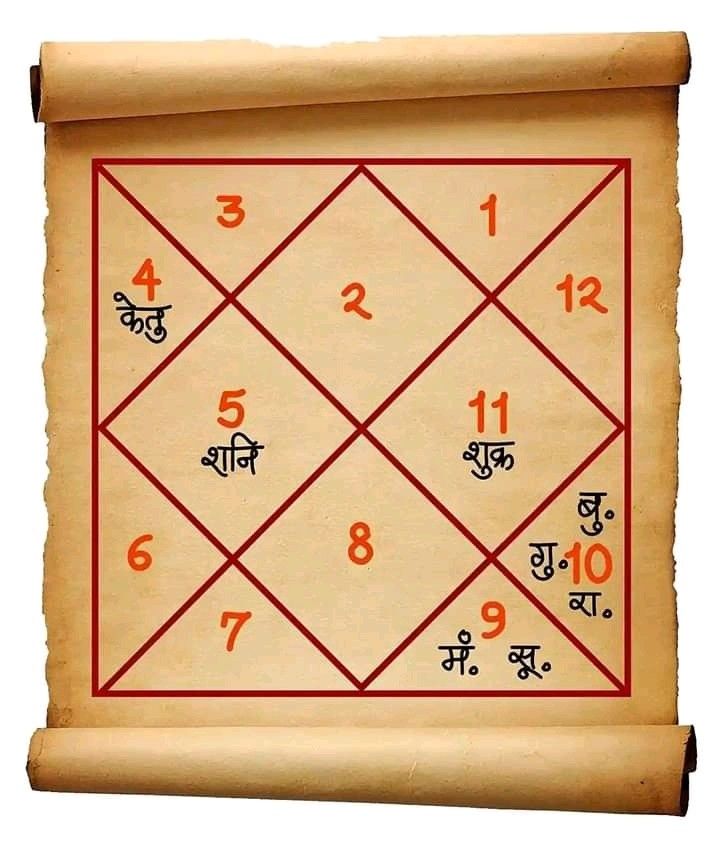
Mangal Dosha, also called Kuja Dosha, is probably the most talked about factor in Indian marriage compatibility. It happens when Mars sits in the 1st, 2nd, 4th, 7th, 8th, or 12th house of the birth chart.
Mars is a fiery, assertive planet. When it falls in these particular houses, it can create tension, power struggles, or delays around marriage. The traditional thinking is to match a manglik with another manglik, since the dosha is believed to cancel out.
That said, a good astrologer won’t just call it and move on. The specific degree and nature of the dosha matters, and it’s never quite the same in two charts.
The Planets Astrologers Actually Focus On
The koota score is important but it isn’t the whole picture. A thorough kundali matching reading also looks at where specific planets fall in both charts:
- Moon — Governs emotional needs and how someone functions at home; this is the starting point of everything in kundali matching
- Venus — The planet of love and intimacy; where Venus sits says a lot about how someone gives and receives affection
- Mars — Reflects physical energy and drive; a harmonious Mars in both charts usually means the couple brings out good energy in each other rather than conflict
- 7th House — The house of marriage in Vedic astrology; the planets here and their lord reveal a lot about what kind of partner someone will be and what the marriage itself might look like
- Sun — Governs ego and how someone expresses themselves; when Sun placements work well together, there’s natural respect between two people
The Planets Astrologers Actually Focus On
The koota score is important but it isn’t the whole picture. A thorough kundali matching reading also looks at where specific planets fall in both charts.
The Moon governs emotional needs and how someone functions at home. It’s the starting point of everything in kundali matching. Venus is the planet of love and intimacy and where it sits says a lot about how someone gives and receives affection. Mars reflects physical energy and drive, and when it’s placed harmoniously in both charts, the couple tends to bring out good energy in each other rather than conflict. The 7th House is the house of marriage in Vedic astrology and the planets sitting here, along with their lord, reveal a lot about what kind of partner someone will be. The Sun governs ego and self expression, and when Sun placements work well together there’s usually a natural sense of respect between two people.
How to Check Kundali Matching: Step by Step
Step 1: Get the birth details right You need the date of birth, place of birth, and time of birth for both people. The time especially, since even a 30 minute difference can shift the reading.
New to birth charts? Read more: Birth Chart Explained
Step 2: Generate both kundalis Use a reliable Vedic astrology platform like Atri to pull up full birth charts for both individuals.
Step 3: Run the Ashta Koota Milan You want the breakdown across all 8 kootas, not just the final total. Each dimension tells you something different.
Step 4: Look for active doshas Nadi Dosha, Mangal Dosha, and Bhakut Dosha in particular need to be flagged and individually assessed. They don’t all carry the same weight.
Step 5: Evaluate the 7th House Get the 7th House read in both charts. It gives you a personalised picture of each person’s marital nature and what they actually need from a partner.
Step 6: Talk to someone who knows what they’re doing A score on a screen only goes so far. A certified Jyotish practitioner can spot patterns, exceptions, and remedies that no number can capture on its own.
A Score Is a Starting Point, Not a Final Answer
Two charts scoring 28/36 can still carry planetary challenges worth addressing. A couple at 20/36 might have 7th House strengths that more than make up for it. The number gives you direction, not a verdict.
If you want a full reading including gun milan score, dosha analysis, planetary strengths, and remedies, the astrologers on Atri Astrology do thorough chart readings, not just a quick score.
Astrology is really about self awareness more than prediction. The marriages that last are built on communication, patience, and understanding each other. Kundali matching just helps you understand each other a little better before you begin.
Frequently Asked Questions
Is kundali matching still relevant today?
When a skilled astrologer interprets it, yes genuinely. It’s not a yes or no machine. Think of it as a framework that adds depth to your own understanding of each other.
What’s the difference between kundali matching and name matching?
Kundali matching uses the full birth chart. Name matching uses the first syllable of each name to determine the nakshatra. It’s a simplified version, usually only used when birth details aren’t available.
Can we marry if the gun milan score is low?
Yes. A lower score doesn’t make a marriage impossible. Astrology guides, it doesn’t override what two people feel or decide. Remedies also exist for most dosha combinations.
Is 27 out of 36 a good kundali match?
Yes, 27/36 sits in the very good range and is generally considered a strong match.
How does kundali matching work?
It compares two birth charts across 8 dimensions and scores them out of 36. The Moon’s position is where it all starts. Astrologers also check for doshas and study the 7th House alongside whatever the score says.
.